Old Bronze, New Fire: How the Costa del Sol Remembered Its Own Name
A coast that spent half a century selling its sunlight finally remembered it could see by it - and the strangers who washed ashore brought the lens.
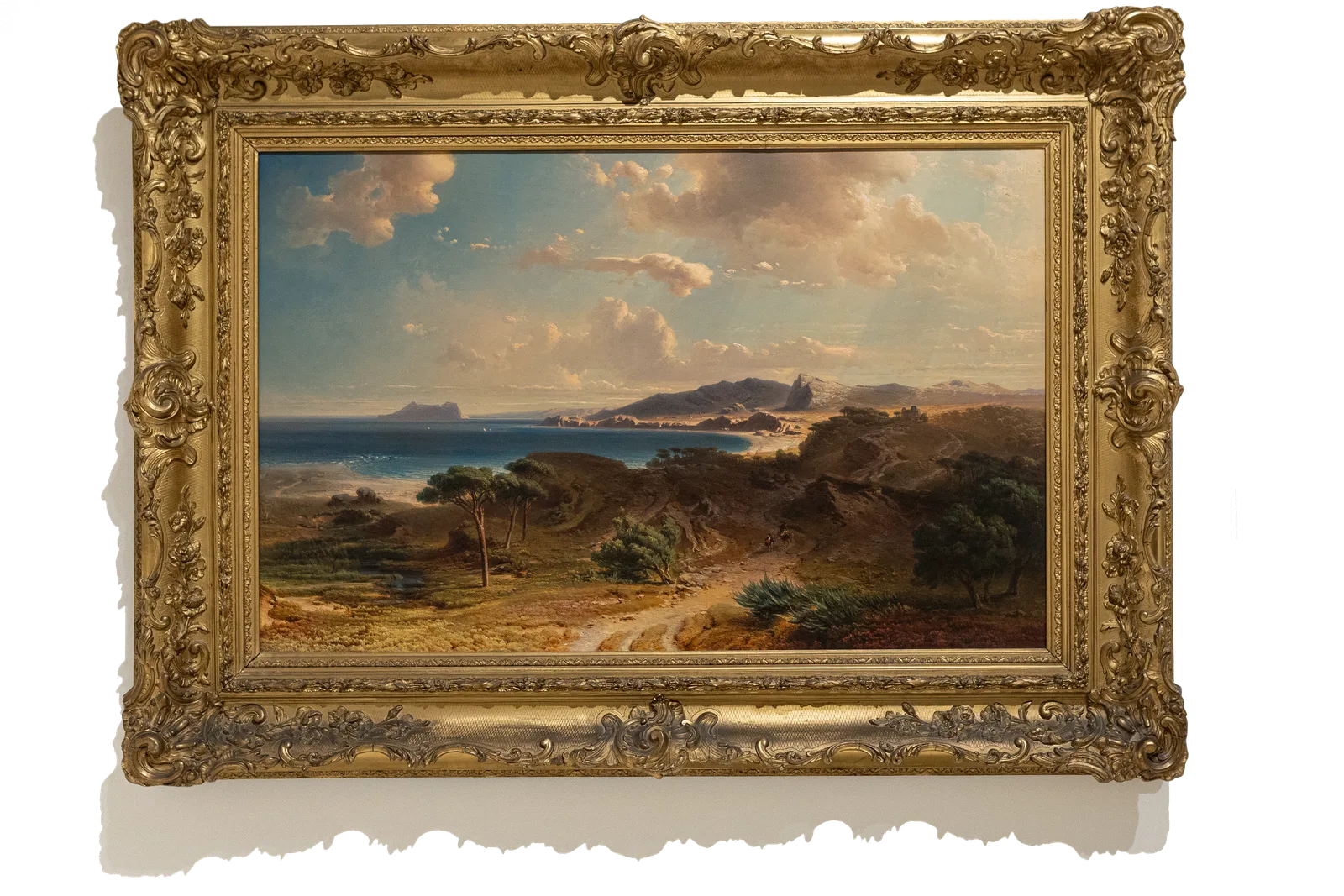
There is a particular quality of light on this coast at the hour when the sun drops low enough to stop punishing and starts painting. Gold on limestone. Amber on glass. The Mediterranean turning the colour of old bronze. It is the light that drew Picasso’s eye before anyone thought to lay a single concrete hotel slab along the shore.
For the better part of half a century, that light fell on very little worth looking at.
The long siesta
Franco’s Spain ran on what scholars call National-Catholic ideology - exalted nationalism, the glorification of the military spirit, fervent Catholicism, a rigid preference for the traditional - and it ran hard. The regime did not merely discourage dissent; it made the air unbreathable. Prominent artists and writers fled into exile, leaving what one academic account describes as “a decided gap in scholarly and creative production.” A silence where a culture had been. The Costa del Sol drew a different card entirely. The regime rebuilt Malaga airport, rolled out the tarmac for the charter flights, and turned the coastline into a foreign-currency machine. Sun as commodity. Shore as till. By the 1960s the strip between Torremolinos and Marbella functioned as what historians have called “the tip of the iceberg of modernity” - a bright, permitted oasis where the dictatorship allowed licences inconceivable elsewhere in Spain, so long as the tourists kept spending and nobody asked too many questions.
The result was a coast famous for hedonism but culturally hollow. Sun, sea, sangria. Concrete towers and all-inclusive menus. A monoculture of leisure, not of thought.
Outsiders at the gate
The thaw came slowly, then all at once. In 2003 the Picasso Museum opened its doors in Malaga and the gravitational field shifted - you could almost hear the click of a new axis locking into place. Within two decades the city went from four museums and 400 square metres of exhibition space to almost 40 museums and 35,000 square metres. The Centre Pompidou arrived - Paris’s first outpost beyond France, dropped onto the waterfront like a bright cube from some other timeline - followed by the Collection of the Russian Museum of St Petersburg, the Carmen Thyssen, the CAC Malaga. One institution, then another, then a constellation. The UN World Tourism Organization’s secretary-general, Taleb Rifai, bestowed on Malaga the title “City of Museums.” A fishing port that had spent a century smelling of sardines and diesel, reinvented as a cultural capital. The kind of transformation that looks inevitable only in the rear-view mirror.
But institutions alone do not make a scene. People do. And many of the people stoking the coast’s creative fire came from elsewhere.
The Arts Society Costa del Sol - originally the local branch of NADFAS, the British decorative-arts network - has operated for nearly two decades, drawing close to 200 members from 19 nationalities. Monthly lectures, study days, heritage trips. Picture it: a room full of retired architects and restless former curators, passing slides of Mudéjar ceilings back and forth like contraband. A quiet engine, yes - but engines move things. Expat energy channelled into cultural literacy rather than poolside lethargy.
Then there are the galleries. In Marbella and along the road to Estepona, Es.Arte and Galeria Arte by Leyton command 650 square metres of contemporary wall space between them - rooms where collectors whose eyes were sharpened in London, Düsseldorf, São Paulo walk in carrying expectations like loaded weapons. They raise the bar because they arrived with one already set.
The coast was famous for hedonism but culturally hollow. Sun, sea, sangria. Then the outsiders arrived - and brought their standards with them.
Walls that talk
Estepona. Walk the old quarter and the walls watch you back. Since 2012 the town has commissioned over 80 large-scale murals across its narrow streets - the Ruta de Murales Artisticos - including the first Braille mural in Spain. Colour poured down whitewashed facades like something dreaming itself awake. Its third International Mural Competition in 2024 drew 116 proposals from 70 artists spanning Germany, France, Canada, the United States, Argentina, Mexico, Australia and South Africa. Ten finalists. Ten walls. Ten days to paint. What began as civic beautification has become something closer to a manifesto - an open-air declaration written in pigment and salt air, legible from across the sea.
This is the pattern along the whole coast, and it has the feel of a tide rather than a programme: local ambition meeting international talent, each raising the other. Malaga’s CAC has shown Louise Bourgeois, Anish Kapoor, Tracey Emin, Olafur Eliasson. Names that command any room they enter. Not borrowed prestige - earned dialogue. The conversation of equals, held in good light.
What the light reveals
For decades the Costa del Sol sold its climate and forgot its culture. The Franco years had smothered it. The tourism boom buried what remained beneath a cash register’s endless ringing. What stirs now along this coast is not nostalgia - nostalgia looks backward and weeps. Nor is it gentrification, that clean-handed coloniser. It is something older and stranger: a place remembering its own name. Remembering that Picasso drew his first breath in Malaga, that the Escuela de Bellas Artes de San Telmo - where the young Picasso studied under his father - laid down roots of craft and seeing long before the charter flights and the concrete came to pave them over. Remembering that the light was always good. Always. A coast defined solely by its shoreline is a coast half asleep, dreaming someone else’s dream.
The expats did not strike the match. But they were the oxygen. They crossed the water carrying expectations like luggage - galleries, lectures, residencies, the cultural architecture of the cities they had shed - and when they found bare rooms, some of them built the furniture themselves.
Golden hour again. The light on the limestone. The Mediterranean, old bronze. Something worth looking at, at last.